| |
|
| |||

| |
PRESIDENT’S REMARKSDear , ANNOUNCEMENT: NEW BOARD MEMBERS We have enriched our board with six remarkable members, some of whom are familiar faces—— Hugo Estrella, Argentina: A distinguished Professor of Latin American Studies at the University of Pisa, Hugo also founded the Argentine Ethical Humanist Association and heads the Center for Inquiry in Italy. We are grateful to him for taking on the role of Advocacy Director. August Berkshire, USA: A past member of the board of directors at American Atheists and the Freedom From Religion Foundation, August’s previous roles include AAI Vice President and President of Minnesota Atheists. He has joined our board once again as Vice President. Christine Shellska, Canada: Our former AAI President and Secretary, Christine returns as our North America Regional Director. Avi-Yona Israel, USA: An educator and Director of Advocacy at the Seventh Wave, she takes on the mantle of AAI Commercial Director. Alfonso Ugarte Johnson, Bolivia: With a rich background in musical theatre, Alfonso engages in insightful debates on Clubhouse. He takes charge as our Central & South America Regional Director. Amir Schnabel, Israel: As the current President of the Israeli Atheists Association, an AAI Affiliate Member, Amir comes on board as our Information Security Director. To our new board members, I extend heartfelt wishes for a productive and rewarding journey in their roles. They have been endorsed by the AAI board and will stand for election by our Affiliate Members at our forthcoming Annual General Meeting. A HEARTFELT GOODBYE TO BILL It Is essential to acknowledge the various chapters in AAI’s organizational journey and the individuals who have contributed to its mission. In light of this, we wish to announce that Bill Flavell will be stepping down from his role as AAI Secretary. Bill has been an indispensable part of the AAI family, taking action in countless ways and shaping discussions. Every role in an organization has its challenges, and through the highs and lows, Bill has remained dedicated to our mission. As one chapter closes, another begins. Bill is now redirecting his energies toward the literary world. We’d like to acknowledge his recent publication, True or False?: 30 Questions to Kickstart Critical Thinking for Kids. Bill, thank you for your contributions to AAI. We wish you success in your endeavors. TRANSPARENT GOVERNANCE: ADDRESSING THE PAST In light of allegations surrounding events between 2017 and 2018, our board conducted a comprehensive investigation, culminating in a Disclosure Document in November 2022. This document identified five oversights by directors during the 2017-2018 term, highlighted four decisions open to critique but within AAI’s bylaws, and cleared twenty allegations as unfounded. An Extraordinary General Meeting was convened in January 2023, to which affiliate members were invited, to recommend corrective measures. Demonstrating our commitment to transparency, board members refrained from voting, allowing members to lead the decision-making. A commendable 52 members participated, with 42 affiliate members actively voting and contributing to the deliberations—a record attendance for an AAI meeting. The outcome was clear: three bylaw modifications were approved, and members opted against any further action regarding past oversights. Our collective voice was heard, enabling AAI to move forward with renewed purpose and dedication. REGISTRATION: CALIFORNIA, USA We are pleased to share a significant update regarding AAI’s administrative journey. All paperwork essential to recognize AAI as a non-profit organization registered in California has been diligently completed and submitted. While maintaining the required documentation since our inception has been a challenge, we have made dedicated efforts to rectify any past oversights. This includes tirelessly resolving specific registration and tax concerns from as early as 2013. Importantly, AAI is recognized by the IRS as a 501(c)(3) public charity. It is worth noting that many non-profits grapple with similar challenges, and many may be unaware of their non-compliant status. Your continued trust and patience have been invaluable. We remain devoted to ensuring transparency and upholding the highest standards as we progress. THE NEW NEWS We acknowledge the intermittent release of our newsletter over the past year and sincerely regret any inconvenience. We are rejuvenating our newsletter, symbolizing a fresh start. Our goal is to roll out quarterly issues. We want to curate content that resonates with you, be it Board updates, campaign highlights, affiliate news, insights into how we assist atheists in peril, or in-depth articles on atheism and religion—we urge you to share your preferences. Please tell us what you are passionate about by reaching out to your regional director; expect them to reach out to you over the next year. Together, let us shape AAI’s promising future. |
|
|
|||||
| |
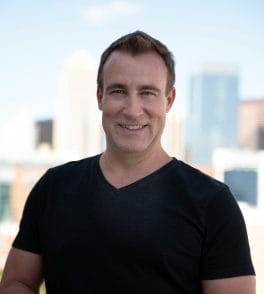
ATHEIST SUPPORT NETWORKAcross the globe, atheists and secularists encounter discrimination, persecution, and even threats to their personal safety because of their beliefs (or lack thereof). In some regions, atheists live in constant fear; the expression of atheism can lead to social ostracization, legal consequences, serious violence, and even murder. At Atheist Support Network, we work tirelessly to find safety for atheists at risk. In most cases, these activists are victims of blasphemy laws and suffer from inhumane torture and cruel treatment. We rely on the support of active members for a stable source of income. The impact of your donation on atheist human rights defenders is truly meaningful. Here is what we have accomplished with your generous contributions:
These cases represent just a few instances of the good done by the Atheist Support Network. Tonoy Emroz Alam Director, Asia & Atheist Support Network |
|
|
|||||
| |
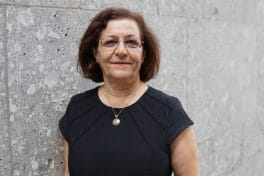
AAI: First, we would like to ask how you handle all of the difficult things that you see as an activist. MA: I don’t want it to become a monster that defines every part of my life. I know people that I met from Iran that have developed paranoia. I want to prevent and avoid this. I always say on Facebook that I have no fear. Everyone is going to die one day. If it’s on the street being hit by a bullet, then that’s what it is. A very important part is my husband, who is very, very supportive—he says, “Go do what you need to do, we are all idiots…” He doesn’t say don’t go out, don’t expose yourself. His support is very strong. AAI: Is your husband also an activist? MA: My first husband was executed in Iran. I met my second husband in Kurdistan and he’s also an activist. AAI: Do you work together on the road or on the same types of projects? Or do you each have a different focus? MA: I am more on the road and active in a different way. But he is also active politically against Islamic Asia. Especially, his focus is Kurdistan. Everyone does their own work, but we talk very intensely. The children are big, so the two of us are on our own in the apartment, and we can do that. AAI: Recently, you finished a film called Mina: The Price of Freedom about your life and activism, and now it’s available in English, so it seems like the perfect time to ask you about it. We’ve heard that everyone who saw it was in tears by the end. Do you have a favorite scene? MA: So, there are two parts that I like the most. In 2010, we de facto abolished stoning in Iran, and I held a speech in Brasilia—I like the scene when I’m giving the speech. I look very active and present, open, so I like that scene very much. The other is when there was a demonstration against executions in Cologne where they threw flowers in the River Rhine as a symbolic gesture. It was nicely done, and so well-received by the people. AAI: Is there another moment in your life that didn’t make it into the film, but would make a good movie scene? Something that makes you think, "Wow! If a camera had been there at that moment and I could show that now, that would be cool.” MA: In Kurdistan, I was working at a radio station. Sometimes I think it would be great if that work was filmed. Many young people worked there. I have spoken on the radio in Persian or Turkish with people. This would have been a good part of my life to capture. I was there for 9 years, so it would be a long movie. My children asked me, “Mom, how was nine years in Kurdistan?” I said, “Well, you know, I didn't eat ice cream for nine years.” And then they said, “Oh my god, poor mom.” But really, there have been so many young people with the spirit, ideas, and willingness to fight and risk their lives to fight for freedom against this cruel regime. MA: This movie that we’re talking about—Mina: The Price of Freedom—is a documentary about me. And it’s an important movie. But there are some other stories that are no less worthy of being movies. For instance, when I was in San Francisco, I had the idea to make a movie that never came to be, about the case of a 17 year old girl named Nazanin who was attacked by a group of young men. She stabbed one of them in self-defense before being raped and imprisoned in Iran. We found a girl with the same name, Nazanin, in Vancouver, Canada—a beauty queen—who’d heard of her Iranian counterpart and wanted to help. I connected them and wrote a book about the story, and due to the political efforts of myself and many others, Nazanin in Iran was freed. Unfortunately, this movie was never realized even though there was the idea to make it. But there are many other stories with a happy ending and many movies could be made about them all. AAI: Is the Nazanin story the most special to you? Are there others that really stand out in your mind? MA: That story is very touching, but it is only one out of several. Nazanin is a personal story, but there are political achievements that have helped many people. For example, the fight against stoning was very important, and we had a big campaign for a woman named Mohammadi Ashtiani. That was a big achievement because, before 2010, almost all women in Iran had been afraid of ending up in that hell at one point or another. 2010 was a real gamechanger. Not only in Iran, but in Nigeria, in Sudan, stonings decreased. I’m a left-wing activist, so the media had no interest in spreading that campaign, one on the wrong side of the political spectrum. MA: We started this campaign in 2007—a young person from Iran called me and said “Hello, do you do human rights work?” and I said, “Yes, of course, what’s the issue?” He said, “My mother will be stoned.” I asked for the names, and then I asked “Where is your mom?” He said “In prison, Tabriz…” So, this is the same prison where my husband was executed. I asked the kid to give me a minute to collect myself—and, then, the campaign was born. In August 2010, 110 cities organized demonstrations. That was a great achievement. AAI: For young activists today, do you have any recommendations or advice? MA: A lot of young people who are now on the road in Iran—we have contact and we talk a lot. One point is very important. This young generation is really very active, well-informed, and also has many ideas. So that is very interesting for me. But I do give advice. For example, how to organize a campaign, how to absolutely defend human rights, regardless of gender, of religion, of affiliation, of nationality. AAI: What is the difference between helping a person step away from religion as opposed to helping a country step away from religion? MA: The most important thing is to fight, not only talk, and to fight against every piece of the problem. I’ve been trying to change Iran for 40 years, but I fight for individual people. For example, I work at the political level. I write articles. I work with different organizations. Iran has a government rife with executions, with stonings, with women's rights violations. And if you want to fight them, you also have to deal with all these points. I am relatively well known in the Iranian community because of my politics. But you can't just talk about politics and say “This regime has to go.” The goal is always to help millions, even if along the way you do it by helping individuals. We are already going in the right direction. AAI: What are the most important things we can all do to uplift the reputation of humanism? To make it something that people can actually practice? MA: One issue is the capitalist system that drives you to just accumulate more, more money and be distracted from what is important: the people. In my life, I’ve been very much busy with extreme human rights violations. This is really a fate. When you see these extreme human rights violations, you have to do something, and one task for me was figuring out how to make this activity easy. For example, how do you help fight against stoning if you are a normal person who lives in Los Angeles and always has to go to work? So, we went online, and 1 million people have signed our appeal. Just click once, and you're in. So, in the fight against extreme human rights violations, you have to use creativity and keep things interesting. AAI: Is there something everyone who reads this can do today to make a difference in the fight for human rights? |
|
| |
TO LEARN MORE ABOUT REGIONAL EFFORTSAFRICA africa@atheistalliance.org AMERICA, CENTRAL & SOUTH cs.america@atheistalliance.org AMERICA, NORTH n.america@atheistalliance.org ASIA asia@atheistalliance.org AUSTRALASIA australasia@atheistalliance.org EUROPE europe@atheistalliance.org |
|
| |
Looking for something to read? Here’s our pick. Maybe something to wear? Visit our shop! Or, support us by donating. |
|
| |
|
| |||


|
